
Inside the Quantum Marketing: The Future of Marketing Leadership
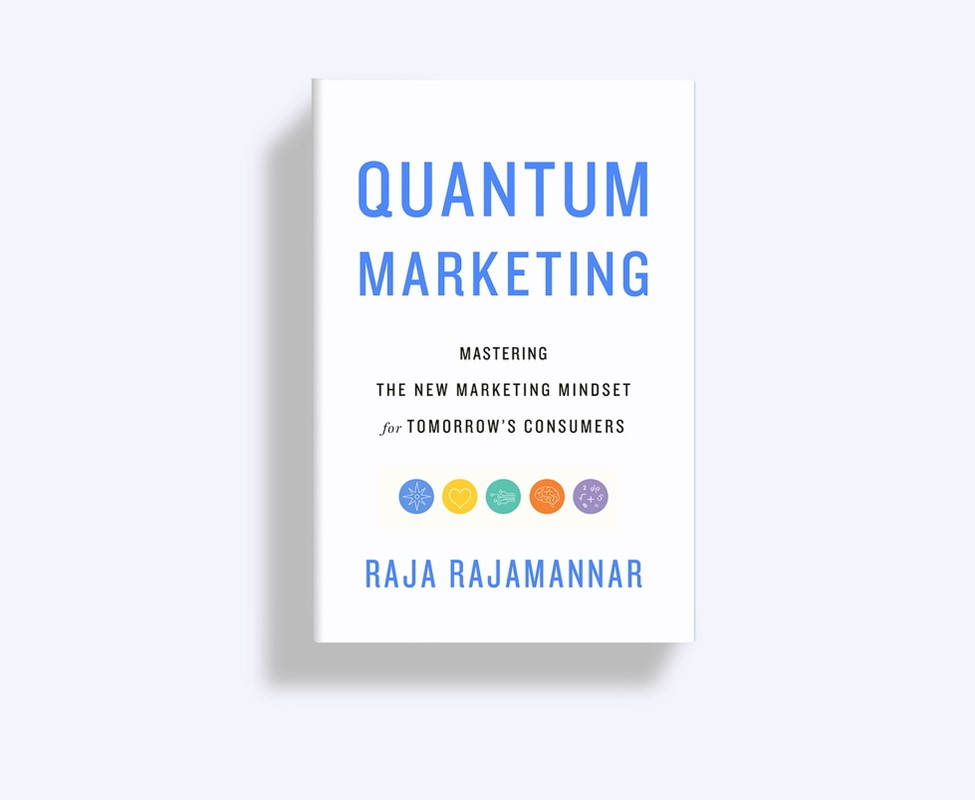
The Quantum Marketing by Raja Rajamannar is not a tactical marketing guide. It is a strategic wake up call. In a world reshaped by artificial intelligence, data expansion, platform dominance, and consumer power shifts, Rajamannar argues that marketing is undergoing a structural transformation that few organizations are fully prepared for.
Rather than optimizing the old playbook, the Quantum Marketing proposes something more radical. Marketing must evolve from a communications function into a technology powered growth engine embedded at the center of enterprise strategy.
What Is the Core Thesis of the Quantum Marketing
Rajamannar uses the word quantum to signal a leap, not a gradual improvement. The argument is simple but powerful. The traditional model of campaigns, creative messaging, and media buying is no longer sufficient in an era defined by artificial intelligence, predictive analytics, and platform ecosystems.
The Quantum Marketing outlines five major forces reshaping the discipline: rapid technological acceleration, exponential data growth, platform control of distribution, empowered consumers, and organizational disruption. These forces are not operating independently. They are interacting in ways that permanently alter how brands build relevance and drive revenue.
The message is clear. Marketing leaders who treat these shifts as incremental will fall behind. Those who redesign their operating model will gain disproportionate advantage.
Technology Is Now Marketing Infrastructure
One of the most important ideas in the Quantum Marketing is that technology is no longer a support tool. It is core infrastructure. Artificial intelligence, automation, machine learning, blockchain, immersive media, and predictive systems are redefining how customers discover, evaluate, and purchase products.
Marketing teams must therefore become fluent in data science, system architecture, and analytics integration. Creative intuition alone is no longer enough. Modern marketing requires the orchestration of algorithms, personalization engines, and performance modeling.
This shift elevates marketing from storytelling to experience engineering. Brands are no longer simply communicating value. They are dynamically delivering it through adaptive systems.
Data Is a Competitive Asset, Not a Reporting Tool
The Quantum Marketing emphasizes that data must move from descriptive reporting to predictive intelligence. Historical dashboards are insufficient in environments where customer behavior changes rapidly.
Forward looking marketers use artificial intelligence to forecast churn, predict lifetime value, score leads, and anticipate demand. This transition changes marketing from reactive to proactive.
When data becomes predictive rather than retrospective, marketing becomes deeply intertwined with revenue planning, product development, and customer retention strategy.
Marketing Must Become a Strategic Growth Engine
Perhaps the strongest theme in the Quantum Marketing is the repositioning of marketing within the organization. Rajamannar argues that marketing leaders must operate at the same strategic level as finance and operations.
Marketing is no longer confined to awareness metrics. It must directly influence margin, pricing strategy, customer lifetime value, innovation pipelines, and partnership ecosystems. In this model, the CMO evolves into a growth architect.
This perspective aligns with the increasing demand for marketing accountability. Boards and executives are asking tougher questions about return on investment, revenue attribution, and profitability contribution. The Quantum Marketing reinforces that marketers must embrace this accountability rather than resist it.
Brand Still Matters in a Technology Driven Era
Despite its heavy emphasis on technology, the Quantum Marketing does not dismiss brand equity. In fact, it argues that brand becomes more important as digital noise increases. When consumers face overwhelming choice, trust and emotional resonance become differentiators.
However, brand building must evolve. It cannot rely solely on polished messaging. It must be embedded into experience design, product quality, ethical governance, and data transparency. Trust is not claimed. It is demonstrated through consistent delivery.
What Marketers Should Take Away
The Quantum Marketing does not provide step by step tactical frameworks. Instead, it encourages leaders to rethink their mental models.
First, marketing teams must integrate deeply with technology and analytics functions. Silos between marketing, IT, and data science must collapse.
Second, artificial intelligence should be embedded into personalization, forecasting, segmentation, and content deployment workflows.
Third, marketing performance should be measured in terms of long term value creation rather than short term vanity metrics.
Finally, marketers must elevate their skill sets. The future belongs to hybrid leaders who understand creativity, technology, finance, and consumer psychology simultaneously.
Why the Quantum Marketing Is Timely
The speed of change in artificial intelligence and automation has accelerated since the book’s publication, making its core thesis even more relevant. Marketing is becoming increasingly system driven. Distribution is concentrated within major platforms. Consumers expect personalization by default.
In this context, incremental optimization is insufficient. Structural reinvention becomes necessary.
The Quantum Marketing serves as both warning and blueprint. It warns that outdated marketing structures will struggle in a data intensive world. It outlines a blueprint for those willing to redesign their operating model around intelligence, integration, and strategic influence.
For modern CMOs and growth leaders, the question is no longer whether transformation is required. It is how quickly it can be executed.
The marketers who treat this shift as a quantum leap rather than a temporary trend will define the next era of competitive advantage.