
Marketing Budget Allocation in 2025: How Leading Brands Are Spending Across Channels
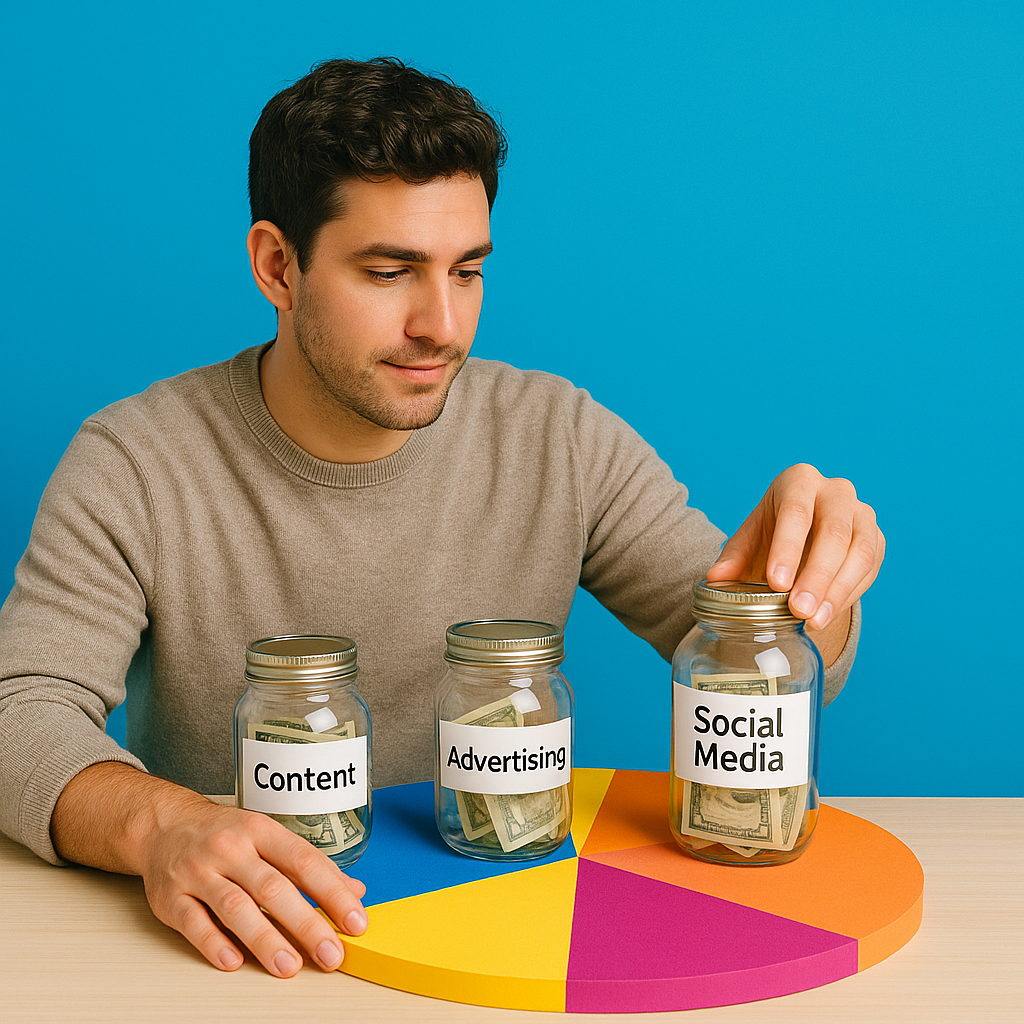
Marketing budget allocation is more critical than ever in 2025. As media channels evolve, costs rise, and artificial intelligence tools transform execution, top brands are reassessing how they distribute their resources. Understanding where leading companies are investing today will help you shape a more competitive and efficient marketing strategy for the year ahead.
Why Marketing Budget Allocation Has Changed in 2025
Marketers in 2025 are operating in a dramatically different environment. The rise of AI content, cookie restrictions, and fragmentation across digital platforms has forced brands to rethink their media mix. Marketing budget allocation is no longer about blindly following last year’s spreadsheet. It is about adapting to where your audience actually engages and how channels deliver impact.
Key Trends Shaping Spending Decisions
- AI integration: More tools for content generation and analysis are replacing manual processes
- Customer journey complexity: Marketers are budgeting for longer decision cycles across more touchpoints
- Content saturation: Higher content volume demands more budget for differentiation and distribution
- Owned media investment: Brands want more control by strengthening channels they fully own
How Leading Brands Are Splitting Their Budgets
The best performing marketers in 2025 are embracing a balanced model across four categories: performance media, brand marketing, owned channels, and innovation. Each serves a distinct purpose and contributes to a holistic growth strategy.
Performance Media Channels
Performance campaigns include paid search, paid social, display, and affiliate. These channels still drive a significant share of pipeline, particularly for ecommerce and B2B lead generation. Brands typically assign between 35 and 50 percent of their budget here.
- Search and shopping ads: Capture bottom of funnel intent with strong ROI
- Paid social: Platforms like Meta, TikTok, and LinkedIn remain central to scale outbound engagement
- Programmatic display: Used primarily for retargeting and awareness
Brand and Awareness Building
In 2025, trust matters more than ever. Leading brands invest 20 to 30 percent of their marketing budget into brand building. This includes sponsorships, video series, native content, and out of home campaigns.
- Connected TV: Highly targeted and less wasteful than traditional television
- Podcast and YouTube sponsorships: Gaining traction with specific professional audiences
- Branded storytelling: Stronger emphasis on thought leadership and education over pure advertising
Owned and Organic Channels
Every year, more marketing leaders shift investment into channels they own. This reduces reliance on fluctuating ad costs and algorithm changes. Companies are allocating 25 to 35 percent of their budget toward SEO, email marketing, CRM systems, and on site content.
- Email and lifecycle automation: Still one of the highest ROI categories
- Search engine optimization: Ongoing investment into blogs, landing pages, and keyword strategy
- Customer portals and communities: Brands are building private forums for deeper loyalty and referrals
Innovation and Testing Budget
Brands winning in 2025 dedicate 5 to 10 percent of their total spend to experimentation. This includes trying new platforms, piloting AI tools, and adopting new formats before competitors do.
- Generative AI tools: Used for testing creative angles, scripts, and personalization
- AR and immersive formats: Popular among Gen Z audiences in retail and entertainment
- Emerging platforms: Threads, Bluesky, and others are getting pilot budgets
Example Marketing Budget Breakdown
Below is a sample allocation for a midsize SaaS company with a one million dollar annual marketing budget:
| Category | Budget Allocation |
|---|---|
| Performance Marketing | 40 percent |
| Brand Awareness | 25 percent |
| Owned and Organic Channels | 30 percent |
| Innovation and Testing | 5 percent |
How to Build Your Own Budget Allocation Plan
Start with Your Growth Goals
Is your goal market share expansion, lead capture, customer retention, or new product launches? Your objectives should guide every budgeting decision.
Review Historical Channel Performance
Before you allocate more, look at what your data says. Examine your past year’s conversion rates, cost per acquisition, and customer lifetime value by channel.
Embrace Flexibility
The top marketing leaders treat their budget as a living document. Monitor monthly performance and reallocate where needed to maximize return on spend.
Set Aside Budget for Testing
Every strategy ages. Testing new creatives, channels, and offers prevents stagnation and identifies future scalable tactics before the competition catches on.
What Smart Budgeting Looks Like in 2025
Marketing budget allocation in 2025 is about strategic balance. Performance and brand are no longer separate silos. Top brands are combining both with investment in owned assets and continuous innovation. The marketers who thrive are those who measure deeply, pivot quickly, and spend wisely across every phase of the customer journey.