
User Experience and Core Web Vitals
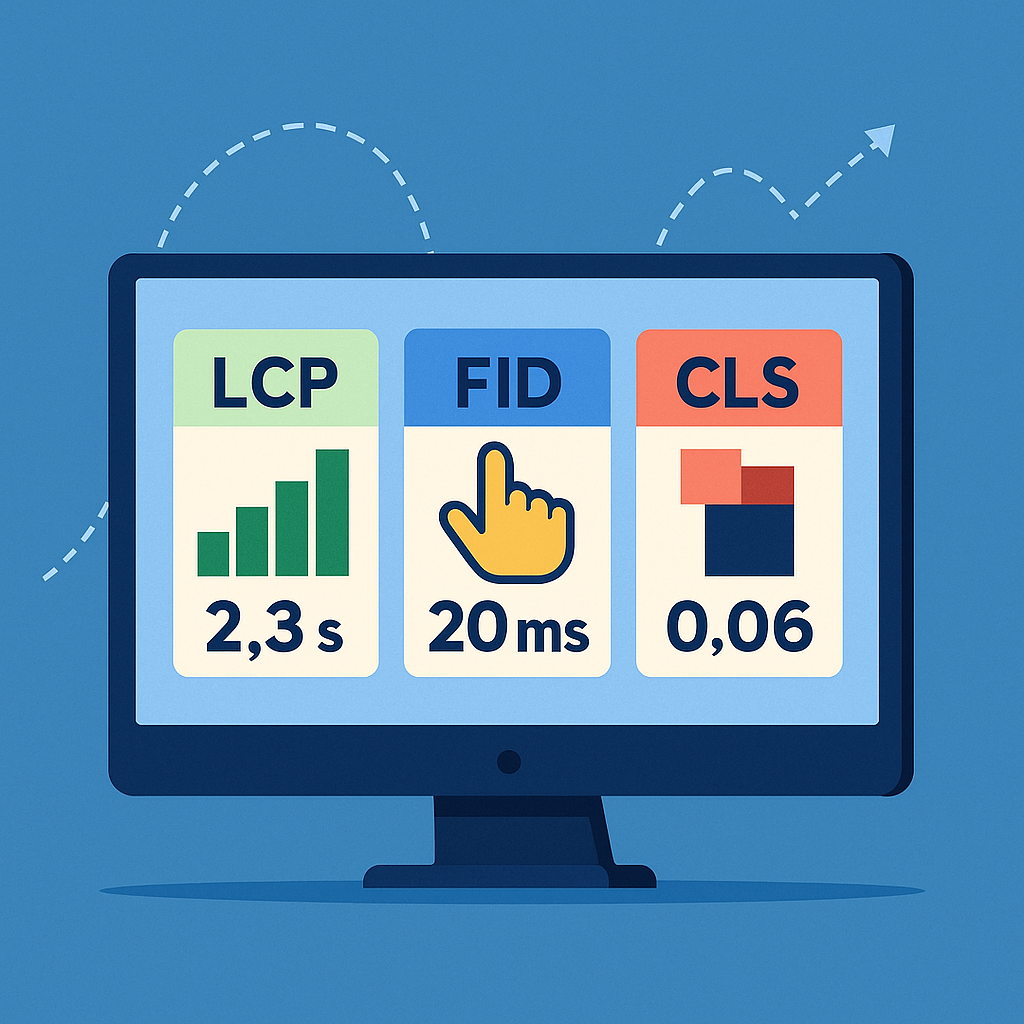
User experience has become a key differentiator in digital marketing, and Core Web Vitals are at the center of how Google evaluates that experience. As more brands compete for visibility, speed, responsiveness, and visual stability are no longer just technical concerns — they directly impact rankings, engagement, and conversion rates.
What Are Core Web Vitals?
Core Web Vitals are a set of standardized metrics introduced by Google to measure key aspects of user experience. They help quantify how users perceive the speed, responsiveness, and visual stability of a webpage. These metrics are now considered ranking signals and are critical to SEO performance.
Largest Contentful Paint (LCP)
LCP measures how long it takes for the main content of a page to load. A good LCP score is under 2.5 seconds. This metric is especially important because users expect pages to load quickly and deliver key content without delay.
First Input Delay (FID)
FID measures the time between when a user first interacts with your site (clicking a button, for example) and when the browser responds. An ideal FID is less than 100 milliseconds. This metric reflects how interactive and responsive your website feels to users.
Cumulative Layout Shift (CLS)
CLS tracks unexpected layout shifts that occur during page load. If elements move around the page while loading, it disrupts the user experience. A CLS score below 0.1 is considered optimal. This ensures a visually stable environment as the page renders.
Why Core Web Vitals Matter for Marketers
Core Web Vitals are more than technical benchmarks — they directly influence bounce rates, session duration, and conversion paths. A slow-loading or unstable page causes users to leave, which leads to lost revenue and reduced visibility in search results.
Google’s algorithm updates have increasingly emphasized experience signals. Pages that perform well on Core Web Vitals are more likely to rank higher and retain visitors. Improving these metrics benefits both organic traffic and paid campaign performance.
How to Optimize Core Web Vitals
- Use tools like PageSpeed Insights or Lighthouse to identify bottlenecks in performance.
- Compress images, reduce file sizes, and remove unused scripts to improve LCP.
- Minimize third-party scripts and defer non-critical JavaScript to reduce FID.
- Include width and height attributes for images and avoid injecting content dynamically to stabilize layout shifts and improve CLS.
- Leverage content delivery networks (CDNs) and browser caching for faster asset loading.
Integrating UX into SEO Strategy
Strong performance in Core Web Vitals supports your overall SEO goals, but it also enhances user satisfaction. Visitors are more likely to trust, engage, and convert on sites that feel fast and intuitive. By prioritizing user experience, marketers can align their technical SEO strategy with business growth and customer loyalty.