
What Modern Marketers Can Learn from Scientific Advertising by Claude Hopkins
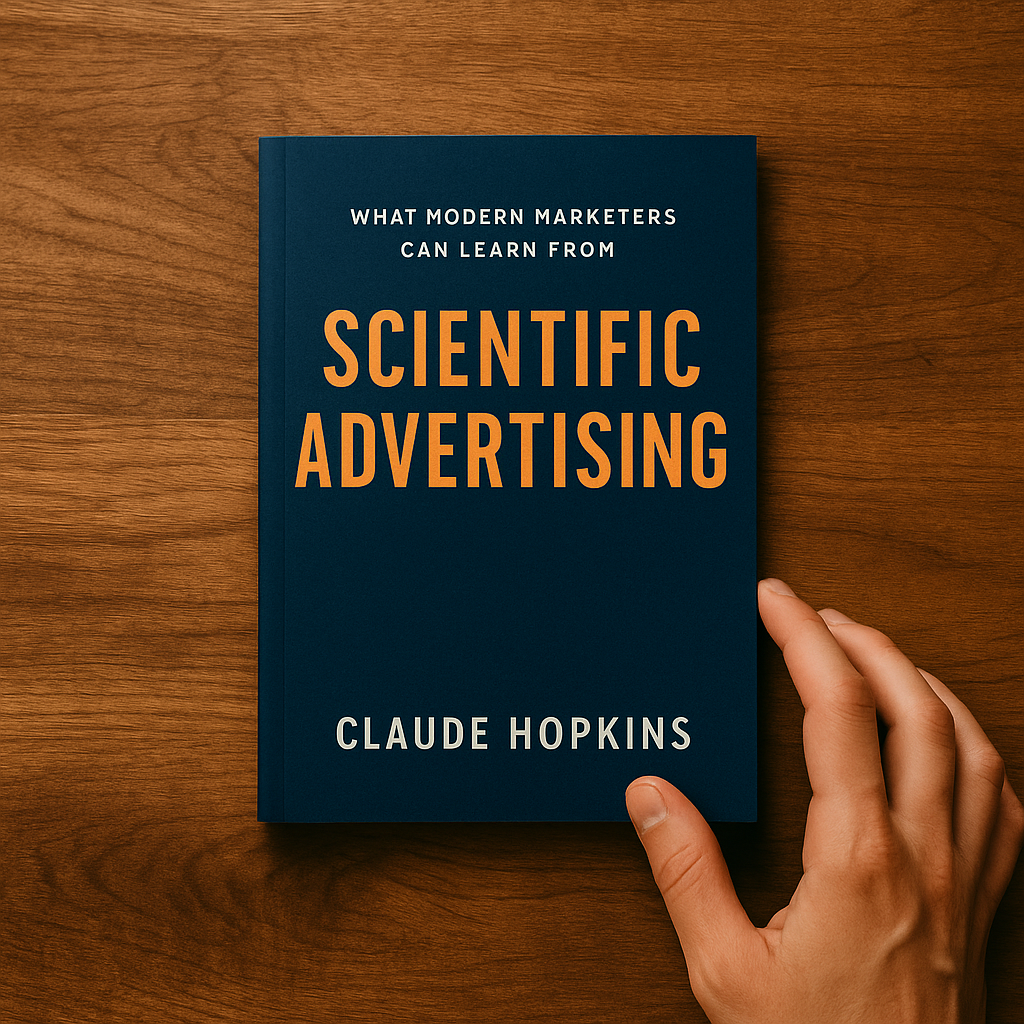
Long before digital ads and performance dashboards, Claude Hopkins laid the foundation for results-driven marketing with his groundbreaking book Scientific Advertising. First published in 1923, the book remains one of the most cited works in advertising history. Despite its age, the principles outlined in Hopkins’ work still apply to modern marketers navigating online campaigns, A-B testing, conversion funnels, and customer acquisition strategies. This article explores the key lessons from Scientific Advertising and how they can still shape your marketing strategy today.
Who Was Claude Hopkins
Claude C. Hopkins was a pioneer in the advertising world during the early 20th century. He worked for major brands such as Pepsodent and Quaker Oats, bringing a data-driven approach to what had previously been a purely creative field. Hopkins believed that advertising was not about art or flair, but about salesmanship. Every ad, he argued, must be measurable and accountable. This thinking was revolutionary for its time and continues to influence performance marketing today.
The Core Philosophy of Scientific Advertising
Hopkins introduced the idea that advertising should be treated as a science, not an art form. He emphasized that all campaigns must be tested, results must be measured, and decisions should be based on data rather than opinions. The success of an ad, in his view, was not determined by how clever or attractive it appeared, but by how effectively it persuaded a prospect to take action.
Key principles from Scientific Advertising include:
- Advertising is salesmanship in print
- Testing should guide all decisions
- Headlines must capture attention and offer a clear benefit
- Copy should be specific, clear, and focused on the customer
- Repetition and consistency are essential to brand success
Advertising Is Salesmanship in Print
Hopkins argued that every ad must perform the function of a salesperson. It must grab attention, communicate value, and persuade action. Just as a sales rep would explain the product, address objections, and close the sale, an advertisement must do the same using words and images alone. This concept laid the foundation for direct response marketing and copywriting as we know it today.
For modern marketers, this means that every piece of content—whether a landing page, social ad, or email—should be rooted in persuasion. The goal is not to entertain but to convert.
Headlines Matter More Than Anything
Hopkins placed extraordinary emphasis on headlines, calling them the most critical element of an ad. A good headline, he believed, does 80 percent of the work. It draws in the reader, promises a benefit, and sets the tone for the message to follow.
Modern advertising platforms like Facebook, Google, and LinkedIn operate on the same principle. Click-through rates, relevance scores, and quality scores all hinge on headline performance. Whether it is a subject line in an email or a banner ad on a website, the ability to quickly capture attention remains fundamental to campaign success.
Testing and Measuring Everything
One of the most forward-thinking concepts in Scientific Advertising was Hopkins’ insistence on testing. He advised marketers to test different headlines, offers, layouts, and messages to determine what worked best. Only the elements that delivered measurable results should survive.
This mirrors the modern practices of A-B testing, split testing, and multivariate testing. Today’s tools may be more advanced, but the idea remains the same: let data guide decisions. Hopkins would have felt right at home using tools like Google Optimize, VWO, or Optimizely.
Use Specificity and Proof
Hopkins discouraged vague or exaggerated claims. Instead, he promoted the use of specific facts, numbers, and product details. He believed that believable statements outperformed broad promises. Testimonials, guarantees, and evidence-based claims were critical to building trust and overcoming skepticism.
In a digital age filled with noise and competition, specificity cuts through the clutter. The best-performing copy often includes real data, social proof, or demonstrable product benefits. Just as Hopkins predicted, specificity still builds credibility and drives results.
Customer-Centric Thinking
Hopkins believed that the customer’s interest should be the central focus of all advertising. He urged marketers to talk about benefits, not features. Instead of describing a product’s technical qualities, he recommended explaining what those features mean for the customer.
This advice underpins modern value-based messaging. The most effective campaigns today are not about the brand, but about the person using the product. Successful marketers speak directly to needs, pain points, and desired outcomes.
Consistency Builds Brands
Hopkins also emphasized the power of repetition. He believed that running the same successful ad multiple times was more effective than constantly changing messages. Consistency, he argued, reinforced brand familiarity and trust over time.
This idea plays out in branding and frequency strategies today. From remarketing to email nurturing to long-running creative campaigns, repeated exposure builds awareness and reinforces the brand’s promise.
Why Scientific Advertising Still Matters
Despite being written over a century ago, Scientific Advertising remains one of the most relevant texts for digital marketers. It strips away the fluff and focuses on what actually drives business growth: clear messaging, customer understanding, and relentless testing. Many of today’s best practices can be traced directly back to Hopkins’ original ideas.
What modern marketers can take away:
- Think like a salesperson, not a brand ambassador
- Let your audience guide your message through data
- Do not guess
- Keep your message clear, specific, and customer-driven
- Build systems that are replicable, not just campaigns that are creative
Claude Hopkins’ legacy is more than a book. It is a philosophy of marketing that still shapes how professionals approach conversion, messaging, and growth today. If you have not yet read Scientific Advertising, it belongs at the top of your list—not just as a history lesson, but as a practical guide for doing marketing that works.