
How VR and AR Are Reshaping the Future of Marketing
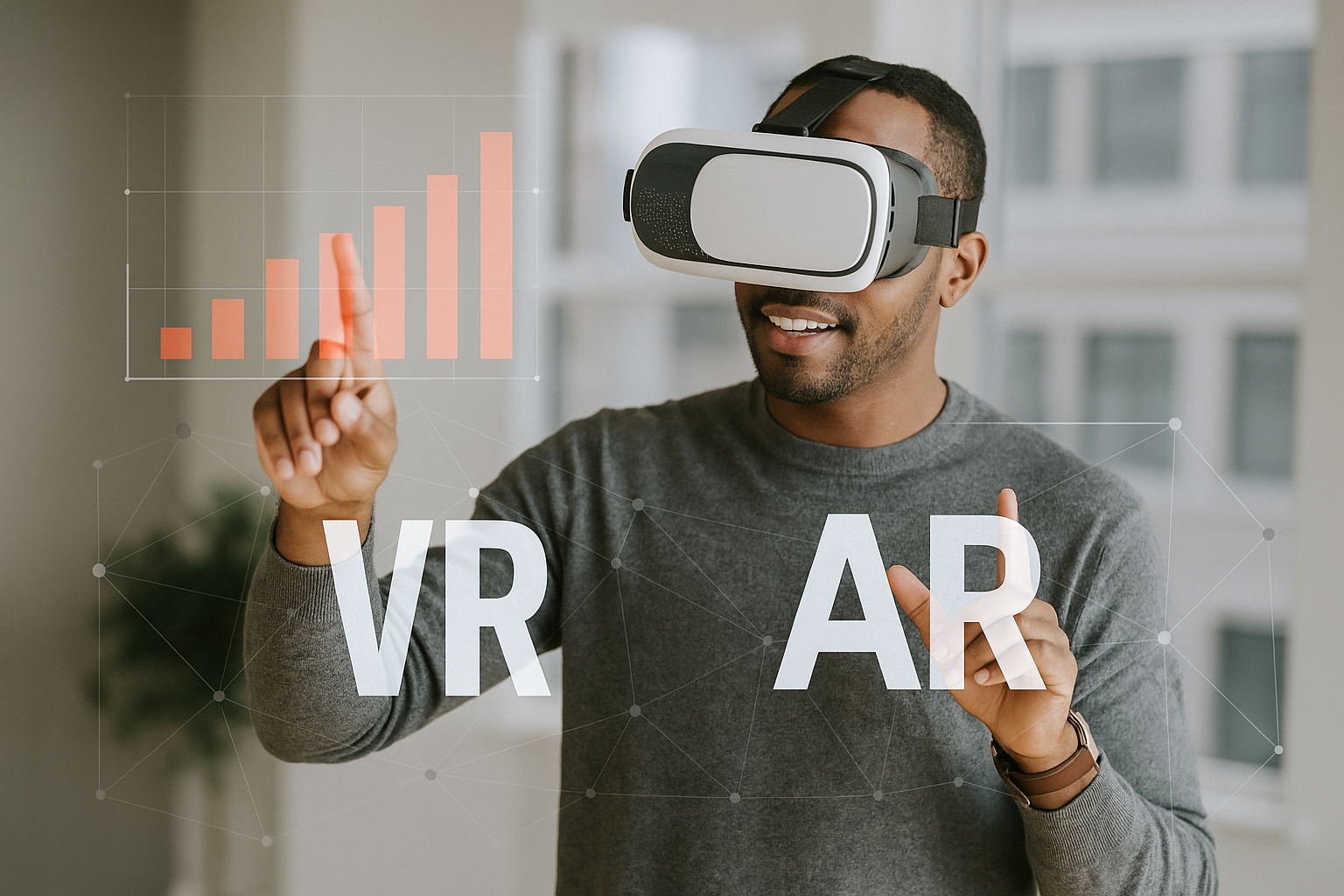
VR and AR marketing are transforming how brands connect with consumers by merging the physical and digital worlds. While virtual reality (VR) immerses users in a fully digital environment, augmented reality (AR) overlays digital elements onto the real world. Both technologies are increasingly being used to create memorable brand experiences, drive engagement, and influence purchasing decisions.
What Is VR and AR Marketing?
VR and AR marketing refers to the use of immersive technologies to deliver interactive and engaging brand messages. Rather than passively consuming content, users can explore virtual showrooms, try on products digitally, or interact with brand elements in three-dimensional space.
Examples of Brands Using VR and AR
Leading brands across industries have embraced immersive technology:
- IKEA: The IKEA Place app allows customers to preview furniture in their homes through AR before making a purchase.
- L’Oréal: Virtual try-on features enable users to test different makeup products using facial AR technology.
- Marriott: The brand used VR headsets to let users experience destinations as part of a travel campaign, driving awareness and emotional connection.
- Nike: Pop-up VR experiences in flagship stores offered an immersive journey through Nike’s design process and product innovation.
Key Benefits of VR and AR Marketing
- Enhanced Engagement: Immersive campaigns hold user attention longer than traditional ads.
- Product Visualization: AR allows users to see how a product looks or works in a real environment, reducing uncertainty and improving conversion rates.
- Personalized Experiences: VR and AR can be tailored to user behavior, preferences, or location for deeper personalization.
- Brand Differentiation: Forward-thinking use of immersive tech positions brands as innovators and trendsetters.
Challenges and Considerations
While VR and AR marketing offer compelling advantages, they require investment in creative development and user accessibility. VR campaigns may demand specialized hardware, while AR campaigns must be optimized for a variety of mobile devices and screen sizes. It is also important to ensure a seamless user experience that adds value rather than creating friction.
Future Outlook
With advancements in 5G, machine learning, and spatial computing, VR and AR marketing is poised to become more accessible, scalable, and effective. Marketers can expect broader adoption of web-based AR, greater integration with ecommerce platforms, and even more immersive storytelling formats that drive measurable results.
As consumer expectations continue to evolve, brands that invest early in VR and AR marketing will be well-positioned to lead the next era of digital engagement.